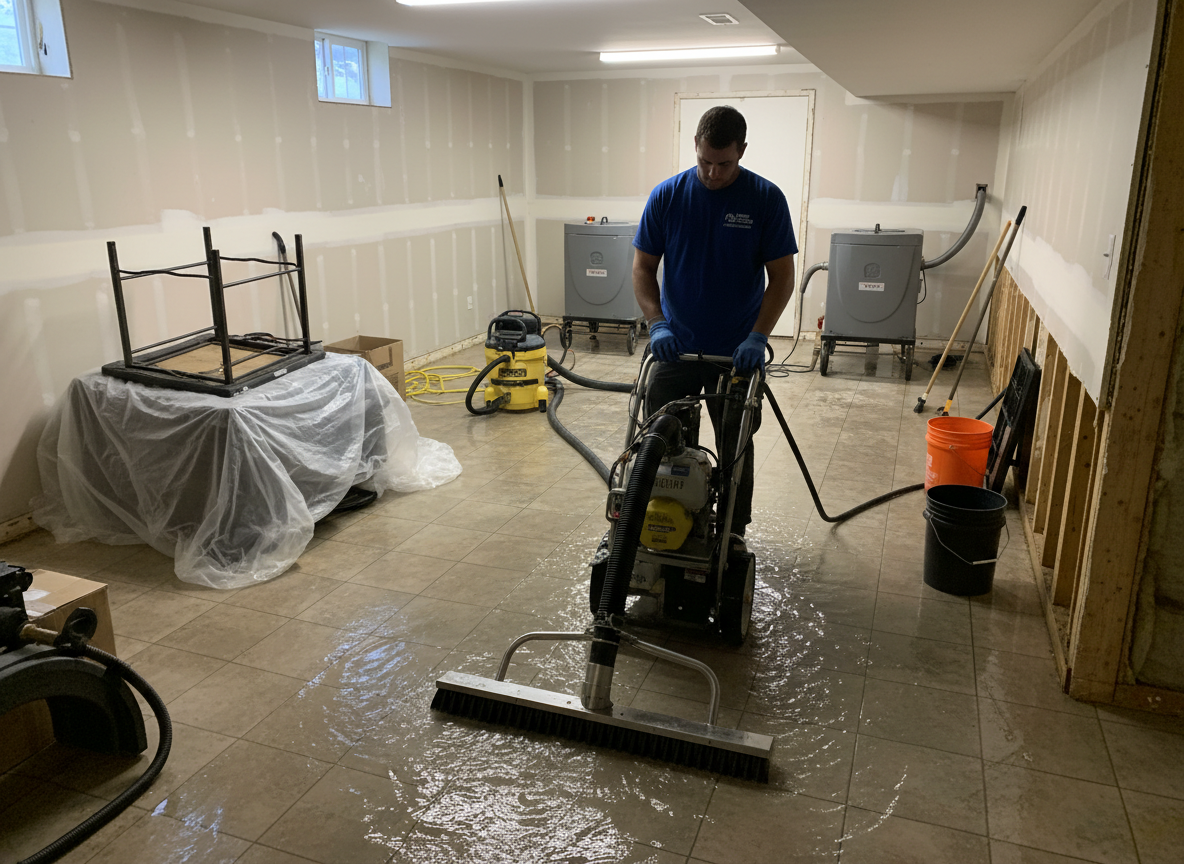
Fort Worth's humid subtropical climate keeps humidity high after summer storms, so standing water in crawl spaces or slab homes in Arlington Heights quickly leads to hidden saturation in pier-and-beam subfloors. Older plaster and lath walls common in Cultural District properties absorb water along mortar lines and release it slowly, requiring targeted negative-pressure drying rather than simple fans. Mitigation crews must map moisture with pin and pinless meters because undetected pockets behind TCU-adjacent brick veneer can trigger mold within 48 hours.
Tarrant County soil is heavy clay that holds water against foundations, especially in Stockyards and Downtown areas where older grading slopes toward the structure. This forces repeated extraction passes and sometimes temporary French-drain style channeling during active leaks. In mansfield and keller homes with slab-on-grade construction, water migrates under tile and hardwood, so crews remove baseboards early to allow airflow and avoid cupping floors. Skipping these steps turns a contained leak into widespread structural repairs.
Mitigation here also means protecting contents in place because many Sundance Square loft conversions have limited staging space. Crews use portable desiccant dehumidifiers sized for 1,500-square-foot footprints typical in these neighborhoods rather than oversized trailer units that over-dry and crack trim. Daily moisture logs are kept because insurance adjusters in Arlington require documented drying curves before approving rebuild.
Technician insight
In Fort Worth, the thing that catches most people out with water mitigation is how fast clay soil and high humidity push moisture back into pier-and-beam homes in Arlington Heights and the Stockyards after extraction; if you don't keep negative pressure on the crawl space for the full drying cycle, mold shows up behind the baseboards two weeks later.
Hidden Saturation After Roof Leak
A TCU-area homeowner called after a summer storm sent water through a flashing failure into the attic. Scans showed saturation in the plaster ceilings and down into the exterior walls of a 1940s brick home. Crews extracted attic water, opened soffits for airflow, and ran desiccant units for six days until readings dropped below 12 percent. The ceiling was saved and no mold developed.
Water Mitigation Services We Offer
✓Emergency Water Extraction
Rapid removal of standing water from slabs, crawl spaces, and carpet pads in Fort Worth homes to stop further absorption into subfloors.
✓Structural Drying
Controlled airflow and dehumidification of walls, ceilings, and joists using meters to confirm dry standards before rebuild begins.
✓Moisture Mapping
Pin and thermal imaging scans of hidden saturation behind brick and plaster in older Arlington Heights and Cultural District properties.
✓Crawl Space Water Mitigation
Pumping, vapor barrier repair, and targeted drying under pier-and-beam homes common throughout Tarrant County.
✓Slab Leak Drying
Core drilling access points and negative-pressure drying under tile and hardwood in mansfield and keller slab homes.
✓Content Drying
On-site drying of furniture, documents, and textiles using climate-controlled chambers to avoid secondary damage in Downtown lofts.
Water Mitigation Cost in Fort Worth, TX
| Service | Typical Range | What Affects It |
|---|---|---|
| Initial Extraction Visit | $450–$900 | Depends on gallons removed and access in older Tarrant County homes. |
| Daily Equipment Rental | $150–$350 | Per day; rises with multiple rooms or high humidity after summer rains. |
| Moisture Mapping And Monitoring | $200–$450 | Includes daily logs required for insurance in Arlington and Mansfield. |
| Crawl Space Or Slab Drying Add-On | $300–$700 | Extra equipment needed for pier-and-beam or slab homes in Stockyards and Keller. |
Ranges are typical for Fort Worth, TX and confirmed with an exact written quote before any work starts.
How it works
- 1
Arrival And Containment
Technicians arrive, set up containment barriers, and identify the water source while protecting unaffected rooms in the Fort Worth property.
- 2
Extraction
Standing water is removed with truck-mounted and portable pumps, followed by immediate removal of saturated carpet pads and baseboards.
- 3
Moisture Assessment
Detailed meter readings and thermal scans locate hidden moisture in walls, floors, and ceilings throughout the affected structure.
- 4
Drying And Monitoring
Equipment is placed and adjusted daily with moisture logs until readings meet industry dry standards for the specific materials.
- 5
Final Verification
Final scans confirm all areas are dry before equipment removal and handoff to reconstruction crews.
Pricing
Pricing varies by water volume, affected square footage, and number of drying days required in Fort Worth's humid conditions.