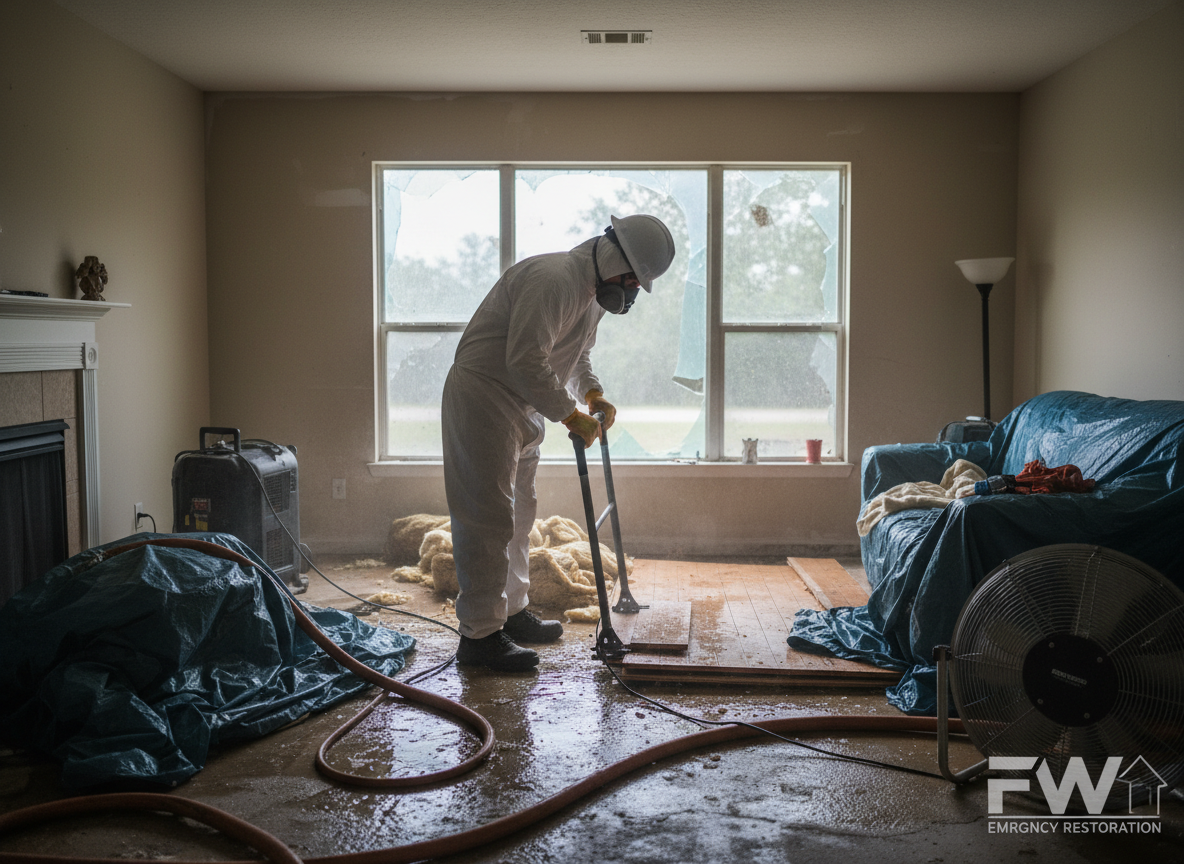
Fort Worth's humid subtropical climate keeps humidity high even in mild winters, so standing water in crawl spaces or behind plaster walls in older Arlington Heights and Cultural District homes can quickly lead to hidden mold growth if extraction is delayed. Tarrant County properties near the Trinity River or in low-lying Stockyards blocks often see groundwater seepage after heavy rains that saturates pier-and-beam foundations differently than slab homes in newer Mansfield subdivisions.
Emergency restoration here starts with locating the source in tight 1920s-era basements common around TCU and Sundance Square, then removing water before it migrates into shared walls with neighboring buildings. Crews must account for the area's clay-heavy soils that hold moisture longer, forcing longer drying times than in sandier nearby Keller terrain.
Technicians use moisture meters on brick and limestone exteriors typical of Downtown commercial conversions because trapped water behind these materials can cause efflorescence and structural weakening that only shows weeks later. Quick board-up or tarping prevents further intrusion during the sudden downpours that hit Fort Worth in spring and fall.
Work in these neighborhoods also requires coordinating with older electrical systems and knob-and-tube wiring found in many Stockyards residential blocks, where water contact creates immediate safety risks that demand isolation before any drying equipment is placed.
Technician insight
In Fort Worth the thing that catches most people out with Emergency Restoration is how quickly humidity in the crawl spaces of 1920s Arlington Heights and Stockyards homes turns minor leaks into widespread plaster and subfloor damage because the clay soil never fully dries between rains.
Downtown Loft Water Intrusion
A pipe burst on the second floor of a converted Downtown building sent water into shared walls and the unit below. Extraction removed several hundred gallons while moisture mapping found trapped water behind brick. Targeted drying prevented mold in the plaster and the owner returned to the space within five days.
Emergency Restoration Services We Offer
✓24 Hour Water Extraction
Removes standing water from flooded rooms and crawl spaces in Fort Worth homes before it reaches neighboring units or finishes.
✓Emergency Structural Drying
Deploys air movers and dehumidifiers sized for Tarrant County humidity to pull moisture from plaster, hardwood, and insulation in older Arlington Heights houses.
✓Sewage and Contaminated Water Cleanup
Handles black water events from backed-up lines common in Stockyards and Downtown properties, including full disinfection and disposal.
✓Roof and Window Tarping
Provides immediate temporary covering after storm damage to prevent additional water entry until permanent repairs are made.
✓Basement and Crawl Space Water Removal
Extracts groundwater from pier-and-beam foundations typical in TCU and Cultural District neighborhoods where clay soil retains moisture.
✓Odor and Moisture Mapping
Uses thermal imaging and meters to locate hidden damp pockets behind walls in Sundance Square commercial spaces before secondary damage occurs.
Emergency Restoration Cost in Fort Worth, TX
| Service | Typical Range | What Affects It |
|---|---|---|
| Emergency Assessment | Free | Includes moisture mapping for homes in Tarrant County |
| Water Extraction | $800–$2,500 | Varies by depth and whether crawl space or multiple stories are involved |
| Structural Drying | $600–$1,800 | Based on equipment days needed in humid Fort Worth conditions |
| Tarping Or Board-Up | $250–$650 | Size of opening and material type on historic Stockyards or Downtown buildings |
Ranges are typical for Fort Worth, TX and confirmed with an exact written quote before any work starts.
How it works
- 1
On-Site Assessment
Technician arrives, identifies water source, and maps affected materials in the specific Fort Worth property.
- 2
Water Removal
Extraction equipment pulls standing water from floors, walls, and crawl spaces while protecting unaffected areas.
- 3
Drying And Monitoring
Industrial drying equipment runs with daily moisture checks until readings match unaffected areas of the home.
- 4
Stabilization And Handover
Temporary protections installed and property returned to owner with documented moisture levels for insurance or follow-up work.
Pricing
Pricing depends on water volume, affected square footage, and how quickly hidden moisture is reached in older Fort Worth construction.