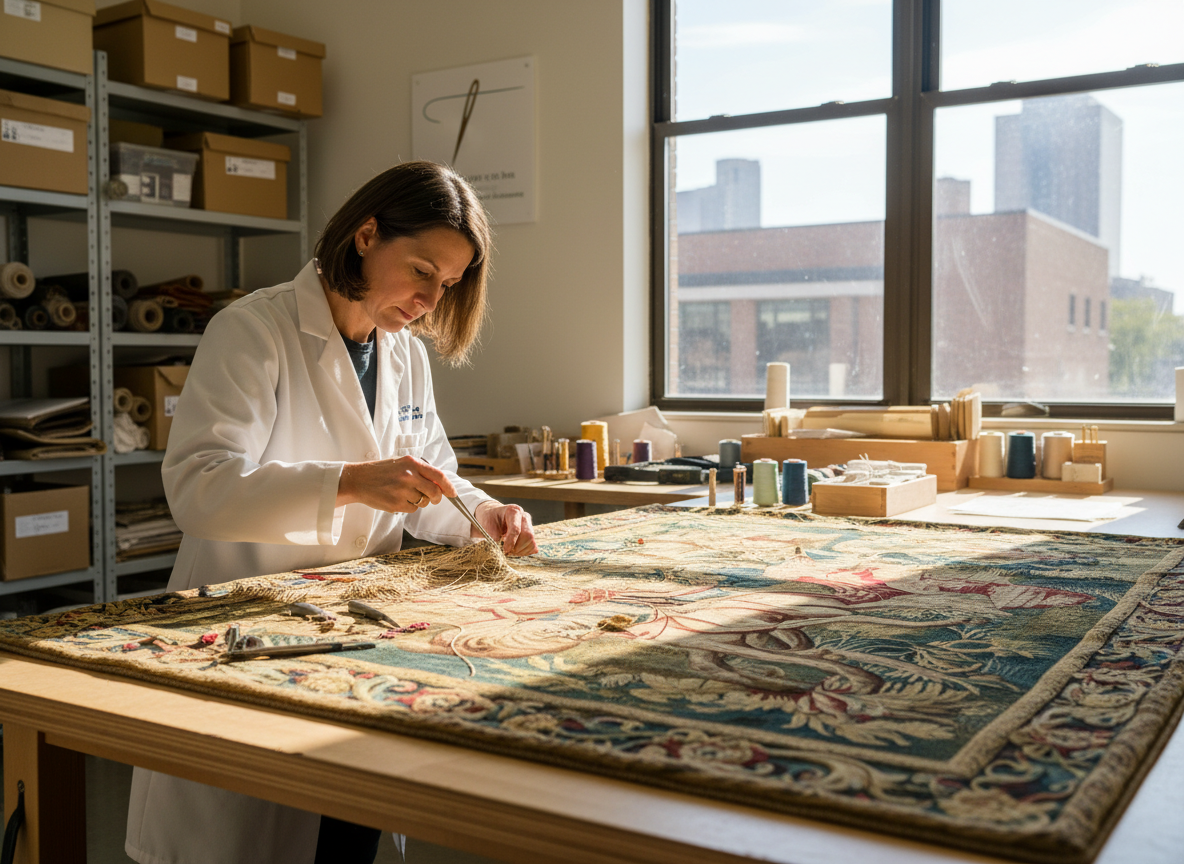
Fort Worth’s humid subtropical climate brings high summer moisture that quickly turns standing water into mold on natural fibers. In older stock like Arlington Heights bungalows and Cultural District homes, wool rugs and cotton drapes absorb water from slab leaks or roof failures and trap spores between layers. Technicians must separate items by fabric type and test for color bleeding before any drying begins, because rapid high-heat drying can set stains permanently in silk and vintage pieces common in these neighborhoods.
Tarrant County properties near the Stockyards and TCU often store family textiles in basements or ground-floor closets where mild winters still allow groundwater seepage. Once saturated, leather jackets, wedding gowns and oriental rugs require controlled low-humidity chambers rather than simple fans. Skipping this step risks shrinkage or dye migration that cannot be reversed, especially on pieces brought in from nearby Arlington or Mansfield homes after flash flooding.
Restoration also includes documenting pre-existing wear so homeowners understand what can and cannot be saved. In Stockyards-era houses with narrow closets, stacked linens and quilts frequently suffer hidden water wicking from adjacent walls. Each item is tagged, photographed and logged before cleaning so the final condition report matches the original damage rather than later handling marks.
Technician insight
In Fort Worth the thing that catches most people out with Clothing & Textile Restoration is the humidity that lingers after a slab leak in Arlington Heights or Cultural District homes. Homeowners often bag wet clothes and rugs thinking they will wait for the adjuster, but two days in a closet during a mild winter still lets mold bloom between wool fibers before we ever see the items.
Stockyards Bungalow Rug And Quilt Job
A ground-floor closet in a 1940s Stockyards home took water from a nearby pipe leak. Wool rugs and stacked quilts absorbed moisture and began to smell within 48 hours. We separated the pieces, ran them through extraction and low-humidity drying, then treated dye migration on two heirloom quilts. Everything returned clean and odor-free with no further mold growth.
Clothing & Textile Restoration Services We Offer
✓Area Rug Drying and Cleaning
Extraction, controlled drying and stain removal for wool, synthetic and oriental rugs pulled from flooded Fort Worth floors.
✓Leather and Suede Garment Restoration
Specialized cleaning, conditioning and reshaping of jackets, boots and bags exposed to contaminated water.
✓Wedding Dress and Formal Wear Recovery
Gentle cleaning, pressing and preservation of delicate gowns and suits after basement or closet flooding.
✓Upholstery Textile Extraction
On-site or shop cleaning of curtains, drapes and furniture fabric to prevent mold growth in humid summers.
✓Heirloom Quilt and Linen Sanitation
Hand washing, disinfection and archival storage prep for vintage textiles stored in older Tarrant County homes.
Clothing & Textile Restoration Cost in Fort Worth, TX
| Service | Typical Range | What Affects It |
|---|---|---|
| Single area rug (under 8x10) | $250–$650 | Size, fiber and water source affect cost |
| Leather jacket or garment set | $175–$450 | Suede and lined pieces cost more |
| Wedding dress or formal gown | $300–$700 | Beading and multiple layers increase price |
| Box of mixed linens or clothing | $150–$400 | Number of items and soil level |
Ranges are typical for Fort Worth, TX and confirmed with an exact written quote before any work starts.
How it works
- 1
Initial Assessment
Inspect each textile on site or in the shop, note fabric type, water source and existing damage, then separate items to avoid cross-contamination.
- 2
Contaminant Removal
Pre-treat soils and rinse with appropriate solutions before any drying to prevent permanent staining on Fort Worth’s common cotton and wool pieces.
- 3
Controlled Drying
Place items in monitored dehumidified chambers sized for local humidity levels to avoid shrinkage or mold in summer conditions.
- 4
Finishing And Return
Press, repair minor damage and return cleaned textiles with written condition notes for homeowner records.
Pricing
Most clothing and textile jobs are quoted after inspection because fabric type, quantity and contamination level vary widely.