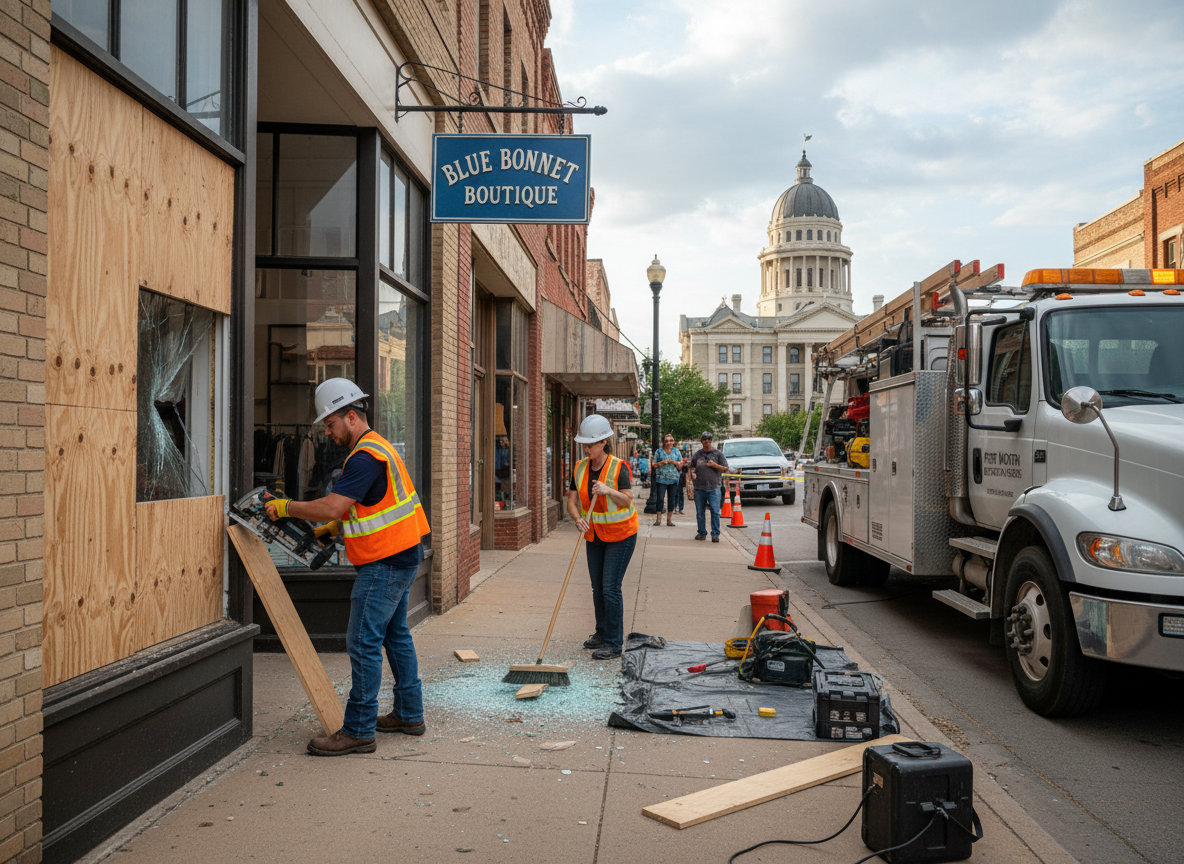
Retail stores in Fort Worth face unique water intrusion risks due to the region's humid subtropical climate with hot summers that slow evaporation and mild winters that still allow pipe bursts in older stock. Buildings in areas like Arlington Heights and the Cultural District often feature original wood subfloors and plaster walls that trap moisture behind fixtures, leading to hidden mold growth if extraction skips the vapor barrier layers common in 1950s-era retail spaces. Crews must account for inventory aisles that block airflow and the need to coordinate with store hours to avoid disrupting sales in high-traffic spots like Sundance Square.
Tarrant County retail locations near the Fort Worth Stockyards or TCU Stadium frequently deal with stormwater runoff from parking lots that enters through loading docks, saturating carpet pads and baseboards under display cases. Extraction equipment has to navigate narrow stockrooms while protecting merchandise from secondary damage, and dehumidifiers run longer because ambient humidity rarely drops below 60 percent even after the rain stops. Technicians check for compromised electrical outlets in older Downtown storefronts before drying begins, since knob-and-tube wiring in some buildings can create shock hazards once water reaches the walls.
Edge cases include burst supply lines above suspended ceilings in Mansfield or Keller strip centers, where water travels along HVAC ducts and soaks insulation above sales floors. Restoration teams remove and replace only the affected sections of acoustic tile to limit cost while ensuring the plenum space dries completely to prevent odor complaints from customers. In every case, crews document moisture readings at multiple depths in flooring and walls so store owners can see exactly where the job stops and normal operations resume.
Technician insight
In Fort Worth the thing that catches most retail owners out is how quickly humidity in the Stockyards and Downtown buildings re-soaks drywall once the initial extraction finishes; we have to keep equipment running days longer than in drier climates because the mild winters never give us a true dry window.
Downtown Retail Water Intrusion
A clothing store near Sundance Square reported water entering from a roof leak during a summer storm. Inspection showed moisture had traveled behind display walls and into carpet pads. Extraction and targeted drying of the subfloor and baseboards restored the space without replacing the entire sales floor, allowing reopening within four days.
Retail Store Damage Restoration Services We Offer
✓Storefront Water Extraction
Rapid removal of standing water from sales floors and entryways using truck-mounted pumps sized for retail square footage in high-traffic Downtown locations.
✓Retail Flooring Drying
Targeted drying of hardwood, tile, and carpet in store aisles with moisture meters to confirm subfloor dryness before reinstalling fixtures.
✓Inventory Salvage and Relocation
Moving and protecting merchandise away from affected zones in Stockyards and Cultural District stores to prevent further water contact during restoration.
✓Humidity Control for Retail Spaces
Deployment of commercial dehumidifiers calibrated for Fort Worth's humid summers to bring store interiors below 50 percent relative humidity.
✓Loading Dock and Backroom Restoration
Cleanup of stormwater intrusion common in Arlington Heights and TCU area retail back areas, including wall cavity drying behind shelving units.
✓Post-Incident Odor Removal
Air scrubbing and antimicrobial application to eliminate musty smells left after water events in older Sundance Square retail buildings.
Retail Store Damage Restoration Cost in Fort Worth, TX
| Service | Typical Range | What Affects It |
|---|---|---|
| Initial Assessment and Moisture Mapping | $150–$350 | Varies by store size and number of rooms checked in older buildings. |
| Water Extraction | $400–$1,200 | Depends on volume and access around fixtures in high-traffic retail spaces. |
| Equipment Drying Package | $600–$2,000 | Daily rate for dehumidifiers and fans; longer runs needed in humid summers. |
| Inventory Protection Labor | $250–$600 | Time to move and cover merchandise in active stores. |
Ranges are typical for Fort Worth, TX and confirmed with an exact written quote before any work starts.
How it works
- 1
On-Site Assessment
Technician inspects the retail space, maps moisture in floors and walls, and notes inventory locations in neighborhoods like the Stockyards or Downtown.
- 2
Water Removal
Extraction equipment pulls standing water from aisles and backrooms while protecting display cases and electrical systems common in Tarrant County stores.
- 3
Drying and Monitoring
Air movers and dehumidifiers run until readings confirm dryness, with daily checks to adjust for Fort Worth humidity levels.
- 4
Final Cleanup and Handover
Remove equipment, sanitize surfaces, and provide moisture documentation so the store can reopen without lingering issues.
Pricing
Upfront quotes after inspection of the specific retail space and water source.