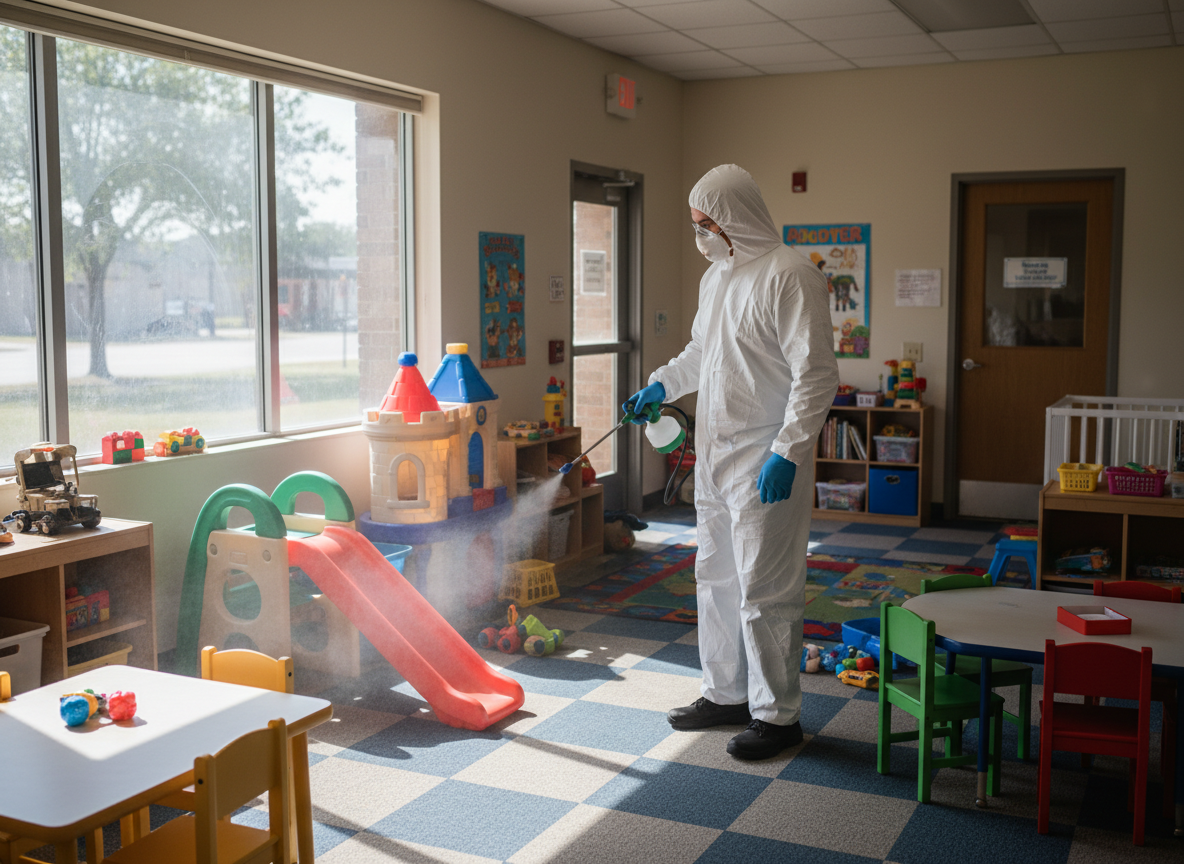
Fort Worth's humid subtropical climate drives rapid mold growth after even minor leaks in school buildings, especially in older structures around the Cultural District and Arlington Heights where original plumbing often runs through crawlspaces. Water from summer storms or pipe failures can pool under classroom flooring and in daycare play areas, creating hidden reservoirs that standard cleaning misses. Restoration crews focus on extracting moisture from porous materials like carpet tiles and gym mats while applying EPA-registered disinfectants safe for children's spaces.
Tarrant County regulations require documented sanitization logs for any water event affecting licensed daycares, and crews coordinate with local health inspectors when incidents occur near the Stockyards or Downtown campuses. Edge cases include HVAC condensation lines that drip into ceiling tiles above kindergarten rooms, spreading contaminants through shared ductwork. Technicians test moisture levels in concrete slabs common to TCU-area facilities before sealing surfaces to prevent recurring issues.
Nearby cities like Arlington and Keller see similar patterns with newer builds on clay-heavy soil that shifts after heavy rains, cracking foundations and allowing groundwater entry into lower-level classrooms. Sanitization protocols here emphasize separating affected zones from active student areas using negative air machines to protect air quality during the process.
Winter mild spells followed by sudden cold fronts can freeze and burst pipes in uninsulated utility rooms, a frequent trigger for after-hours water calls at Mansfield-border facilities. The work prioritizes rapid drying timelines to meet school calendar constraints and avoid extended closures.
Technician insight
In Fort Worth, the thing that catches most people out with School & Daycare Sanitization is how quickly the clay soils around Arlington Heights and TCU shift after a hard rain, pulling moisture back into slab cracks days after the initial extraction. Homeowners and facility managers often stop drying too soon because the surface feels dry, but the humidity here keeps feeding mold behind baseboards.
Water Intrusion in Cultural District Preschool
A burst supply line flooded two classrooms overnight. Crews found moisture trapped under the vinyl flooring and in the wall cavities. Extraction and targeted disinfection cleared the space within 48 hours, allowing the facility to reopen without schedule disruption.
School & Daycare Sanitization Services We Offer
✓Classroom Flood Recovery Sanitization
Removes standing water and applies hospital-grade disinfectants to desks, flooring, and storage after leaks or storms in Fort Worth schools.
✓Daycare Play Area Disinfection
Targets toys, mats, and padded flooring in childcare centers with child-safe solutions following water intrusion from plumbing or weather events.
✓School Restroom Mold Remediation
Addresses hidden mold behind fixtures and in wall cavities common in older Tarrant County school restrooms after repeated moisture exposure.
✓HVAC Duct Cleaning Post-Water Event
Cleans and sanitizes ventilation systems in Fort Worth educational buildings to prevent airborne spread from condensation or flood damage.
✓Kitchen and Cafeteria Sanitization
Restores food prep zones in school cafeterias using food-contact approved products after pipe bursts or appliance leaks.
School & Daycare Sanitization Cost in Fort Worth, TX
| Service | Typical Range | What Affects It |
|---|---|---|
| Single Classroom Sanitization | $800–$1,800 | Varies with carpet versus tile and extent of subfloor moisture. |
| Full Daycare Wing | $2,500–$5,000 | Includes multiple rooms and shared HVAC zones. |
| School Cafeteria Recovery | $1,200–$2,800 | Higher when food surfaces require extra dwell time. |
| Emergency After-Hours Response | $300–$600 | Added for nights or weekends in Tarrant County facilities. |
Ranges are typical for Fort Worth, TX and confirmed with an exact written quote before any work starts.
How it works
- 1
Initial Assessment
Technicians inspect affected zones in the Fort Worth facility, mapping moisture with meters and identifying all water sources.
- 2
Water Extraction
Portable pumps and vacuums remove standing water from floors and subflooring in classrooms or playrooms.
- 3
Disinfection Application
EPA-registered agents are applied to all surfaces, followed by dwell times and HEPA air scrubbing.
- 4
Drying And Verification
Industrial dehumidifiers run until readings meet standards, then final clearance testing confirms the space is ready for use.
Pricing
Costs depend on square footage affected and time required for complete drying in school schedules.