2026-11-05 ·
Water Mitigation vs. Water Damage Restoration: What's the Difference?
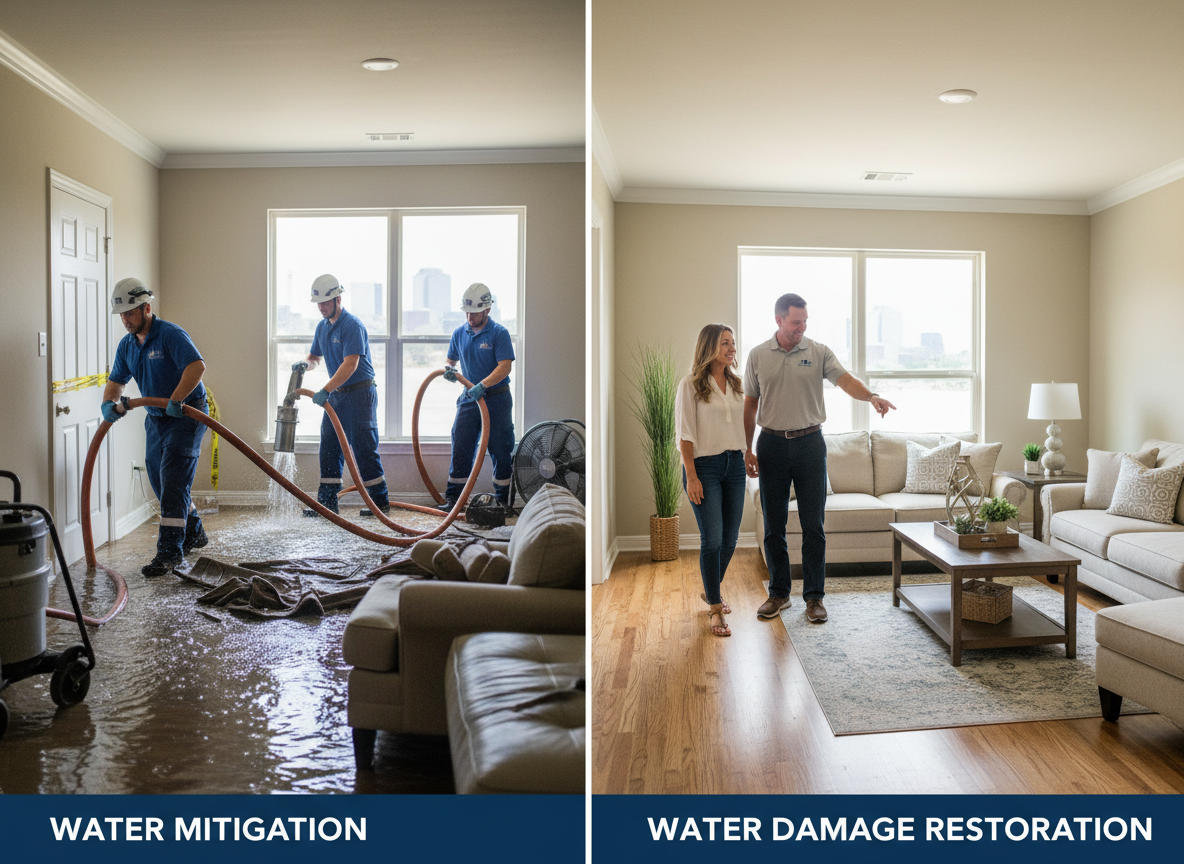
Water mitigation halts ongoing water intrusion and prevents secondary issues like mold, while water damage restoration repairs and returns the property to its pre-loss condition. In Fort Worth homes the two steps often run on separate timelines because the humid subtropical climate with hot summers and mild winters speeds microbial growth once temperatures stay above 70 degrees.
Defining Water Mitigation
Water mitigation focuses on extraction, drying, and containment. Crews arrive with moisture meters and industrial air movers to pull standing water from slab foundations common in Arlington Heights and TCU-area bungalows. In Tarrant County the goal is to drop interior humidity below 50 percent within 48 hours so that drywall in 1960s ranch homes does not delaminate. Technicians also remove wet carpet padding and cut baseboard to allow airflow behind walls. This phase does not include cosmetic repairs or new finishes.
The process changes with local conditions. Summer humidity in the Cultural District can push drying times from three days to five when outdoor dew points remain high. In the Stockyards, older limestone foundations hold moisture longer, requiring longer dehumidifier runs. Mitigation crews document every reading so insurance adjusters see clear evidence that secondary damage was limited.
Defining Water Damage Restoration
Water damage restoration begins once the structure is dry. It includes demolition of irreparable materials, antimicrobial treatment, and reconstruction. In Fort Worth this often means replacing oak flooring in Sundance Square lofts or refinishing plaster walls in Arlington Heights homes built before 1950. The work returns rooms to usable condition rather than simply stopping further harm.
Restoration crews coordinate with plumbers and electricians when hidden leaks affect wiring in crawl spaces beneath TCU Stadium-adjacent properties. They also handle contents cleaning for items stored in flooded basements common in Mansfield and Keller homes. Final steps include texture matching and paint so the space matches the original interior.
How Fort Worth Climate and Housing Stock Change the Timeline
Tarrant County's humid subtropical weather shortens the safe window between mitigation and restoration. After a pipe burst in a 40-year-old Arlington Heights home, mold can appear in seven to ten days if humidity stays elevated. Mild winters keep soil moisture high around slab edges, allowing water to wick back into walls even after extraction. Crews therefore schedule daily moisture checks for at least a week after mitigation ends.
Older housing stock adds variables. Pre-1970 plumbing in the Stockyards and Cultural District often uses galvanized lines that corrode from the inside, creating slow leaks that saturate subfloors before detection. Newer builds near Keller may have PEX lines but still suffer from poor grading that directs runoff toward foundations during heavy spring rains. These realities force mitigation teams to focus on perimeter drainage before drying equipment can finish the job.
Practical Next Steps After Water Intrusion in Fort Worth
Homeowners should first stop the source if safe, then call for extraction within hours. Document every room with photos before any removal begins. For guidance on immediate actions after a burst pipe, see the detailed checklist in our guide What to Do After a Burst Pipe in a Fort Worth Home. When coverage questions arise, review the article Does Homeowners Insurance Cover Water Damage in Texas? before mitigation starts.