Bedford sits in Tarrant County between Fort Worth and the DFW airport, where summer thunderstorms dump heavy rain on 1960s and 1970s slab homes that line streets like Bedford Road and Central Drive. Water often pools along shallow drainage ditches before it reaches the Trinity River tributaries, pushing moisture under foundations and into crawl spaces on older properties near Mayfair Park.
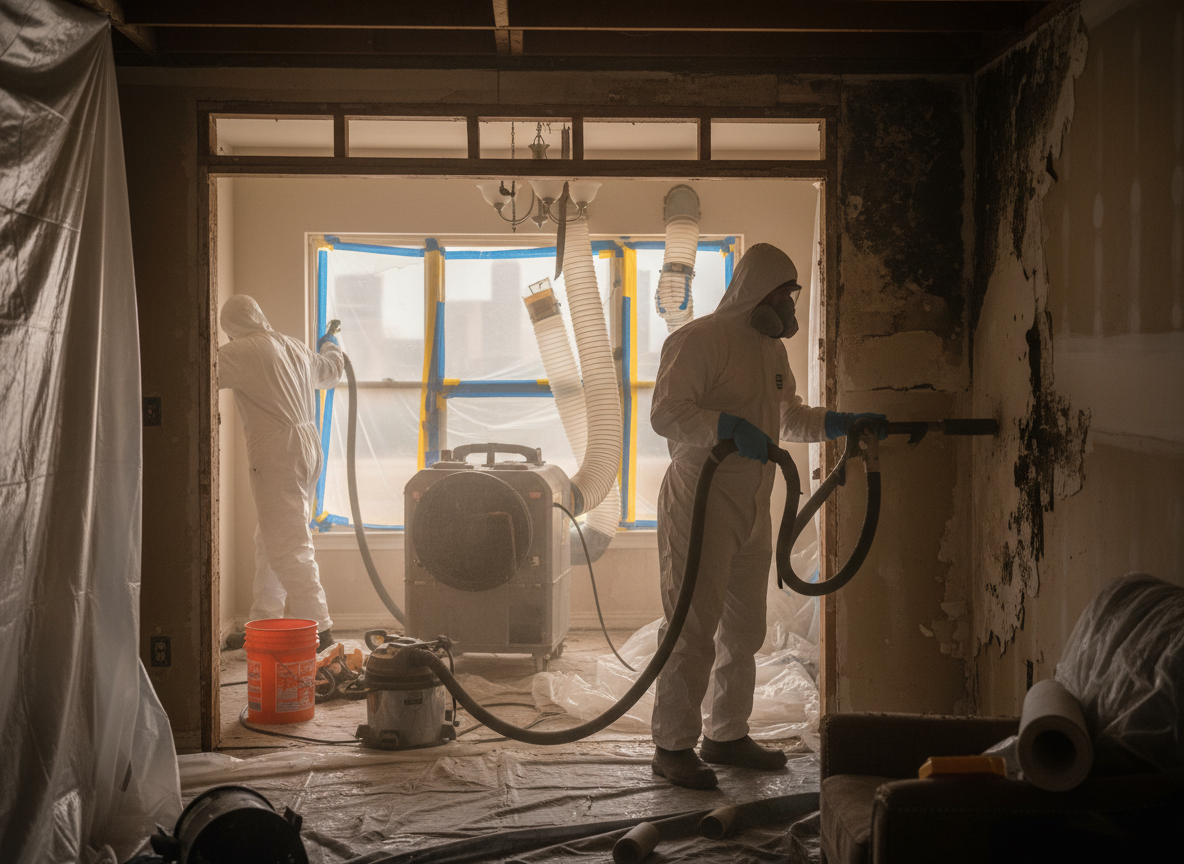
When pipes burst or roofs leak during the humid months, water moves fast through the tight lots and shared fences common in Bedford neighborhoods. Crews reach these homes quickly via Highway 183 or 121, then extract standing water before it migrates into neighboring houses in the HEB area. Restoration focuses on drying the concrete slabs and wall cavities typical of local construction so homeowners avoid long-term mold in the mild winters.
Service trucks stage at L.D. Lockett Park or the Bedford Public Library parking areas when streets are narrow, allowing equipment to reach backyards without blocking traffic. This setup keeps response times short for Bedford residents dealing with sudden leaks from aging plumbing common in the stock of single-story ranch homes.
Around Bedford
We regularly work near:
- 📍L.D. Lockett Park
- 📍Mayfair Park
- 📍Bedford Public Library
- 📍Old Bedford School
- 📍Bedford Splash
Water Damage Repair in Bedford — Local Notes
- •Many Bedford homes built between 1960 and 1980 sit on monolithic slabs with minimal perimeter drainage, so even moderate rain funnels water straight to the foundation edge.
- •Flat lots and older storm sewers along streets like Harwood Road cause quick street flooding that backs up into garages and utility rooms during spring and fall storms.
- •Close spacing between houses means extraction equipment must often be carried through side yards rather than driven, extending setup time on smaller properties.
- •High humidity after storms speeds mold growth inside wall cavities of brick veneer homes, requiring faster drying protocols than in drier parts of Tarrant County.